Water does not negotiate. It follows physics, not hopes. In Mississauga, where lake-effect weather meets clay-heavy soils and deep winter frost, that reality shows up as damp basements, peeling paint, and in the worst cases heaved slabs and moldy air. Good waterproofing is not a trick or a tube of caulk, it is an integrated system designed around pressure, soil mechanics, and building assemblies. After years of evaluating wet basements from Clarkson to Malton, I have learned that the fix rarely starts where homeowners think it does. It starts with understanding how and why water is moving.
How Water Actually Gets In
Below grade, water acts with two main forces: gravity-driven flow and hydrostatic pressure. Gravity brings surface runoff down foundation walls and into window wells. Hydrostatic pressure pushes water through pores and hairline cracks wherever the soil around the foundation holds moisture. That pressure is not abstract. A one metre head of water adds roughly 14.5 kPa to the outside of your wall, which is more than enough to exploit a cold joint or a porous mortar bed.
Capillarity plays a quieter role. Concrete is a sponge at the microscopic level. Water wicks upward through tiny pores, then into organic finishes like wood studs and paper-faced drywall. This is why you can have a visibly dry wall surface with soggy bottom plates. Vapour diffusion adds another layer, where moisture in the soil moves as a gas through foundations with high permeability. The science informs the method, and in Mississauga it usually argues for positive-side control on the exterior whenever feasible.
Local Conditions That Matter in Mississauga
Mississauga sits on a mix of glacial till, clayey silts, and pockets of sand, especially near creek corridors and redevelopment zones. Clay holds water and expands when wet, then shrinks as it dries. That cycle stresses foundations over time, opening micro-cracks that become wet paths. The frost depth in Peel Region typically sits around 1.2 to 1.5 metres. Frost heave can lift poorly drained footings a few millimetres each winter, and over twenty winters that movement opens joints and displaces exterior drain tile.
Heavy summer storms are part of our reality. A single downpour can drop 30 to 60 mm in an hour. If your eaves and grading cannot move that water away quickly, it piles against the wall, saturates the backfill zone, and charges hydrostatic pressure. Add the occasional high water table near Lake Ontario or the Credit River, and you can see why mississauga waterproofing is a year-round conversation rather than a seasonal chore.
The Baseline Diagnostic
The first thing a seasoned waterproofing contractor does is map symptoms to pathways. Brown stains halfway up a wall usually point to lateral moisture, not a burst pipe. Efflorescence along mortar joints in block foundations tells a different story than a sharp vertical crack in poured concrete. Smell is a diagnostic too, earthy mustiness means chronic damp, not necessarily standing water.
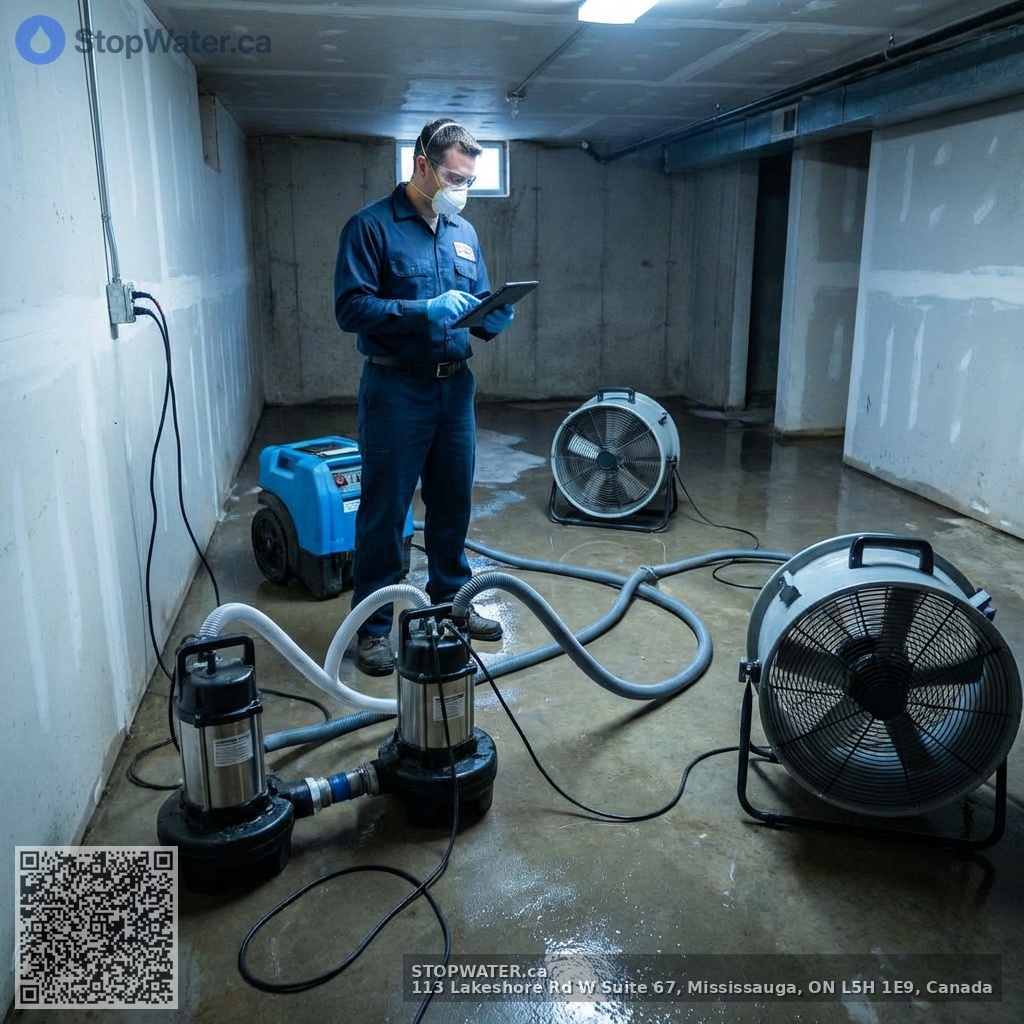
A quick homeowner-level triage helps decide whether you need full exterior excavation or if targeted interventions will do.
- Rusted or clogged downspouts, negative grading near the foundation, or water pooling in window wells are red flags for surface water mismanagement. Efflorescence bands, bubbling paint near grade, or dampness that worsens after rain suggest lateral moisture through the wall. Water at the cove joint where the slab meets the wall, especially after long rains, points to slab-edge infiltration and inadequate footing drainage. Narrow, active cracks that weep under rain events are candidates for injection if the structure is otherwise sound. Sump pump running constantly, or cycling during dry weather, hints at a high water table or failed weeping tile sending full flow to the pit.
That five-minute check cannot replace a site assessment, but it can save you from buying a dehumidifier when you need proper drainage. When you search for waterproofing services near me, use these tells to frame the first conversation.
Foundations Speak Different Dialects
Poured concrete walls behave differently from older block walls. Poured walls are monolithic, stronger in bending, but they crack along predictable lines, typically vertical hairlines at 2 to 4 metre intervals as the concrete cures. Those cracks can be sealed effectively from the interior with polyurethane injection if the exterior membrane is intact or if excavation is not practical.
Block walls are hollow chambers. Water can travel through mortar joints, fill cores, and emerge unpredictably. In those homes, interior injections only band-aid the symptom. A full exterior system with membrane, drainage board, and properly sloped backfill is the safer fix. Where budgets constrain, an interior perimeter drain with weeping channel and sump can relieve pressure and stop seepage, but it does not dry the wall itself. Expect colder, slightly damp surfaces unless you insulate with a proper foam system designed for below grade.
The Building Science: Materials That Win
Not all products with the word “waterproofing” deliver the same function. The right choice depends on whether you are stopping bulk water, resisting vapour, bridging cracks, or all three. The common families used by reputable waterproofing services in Mississauga include:
- Self-adhered SBS or rubberized asphalt membranes. These create a continuous positive-side barrier. Good at crack-bridging within rated elongation limits. They want a clean, primed surface and do not like sharp corners. Liquid-applied elastomerics. Polyurethanes and modified asphalts roll or spray on, forming seamless skins. They handle complex geometries well and can achieve respectable dry film thickness, typically 1.2 to 2.5 mm in residential work. Surface prep matters. Thermoplastic drainage boards and dimple mats. These are not membranes, they are pressure-relief planes. When installed over a membrane, they protect the waterproofing and create a capillary break that channels water to the footing drain. Crystalline cementitious coatings. They react with free lime in concrete to form insoluble crystals that block pores. Strong for positive-side and sometimes negative-side work on sound concrete. They require proper curing time and moisture for activation. Bentonite sheets. Sodium bentonite swells when wet, self-sealing small penetrations. Excellent for blindside or new-build applications. Retrofitting on an existing house requires careful detailing to avoid displacement.
For cracks, polyurethane injection excels where movement occurs, since it remains flexible after curing and expands to fill voids. Epoxy injection is structural, used to glue a fractured concrete section back together, but it is less forgiving on a moving crack. An experienced waterproofing contractor chooses based on what the wall needs, not what the truck has that day.
Exterior vs Interior: Positive-Side Control Usually Wins
Stopping water before it reaches the wall preserves the structure and the indoor environment. That is the essence of positive-side waterproofing. In practice, it means excavating to the footing, cleaning the wall, repairing cracks, applying a membrane, adding drainage board, and ensuring a free-draining path to functioning weeping tile. Then you backfill with proper material and reinstate landscaping.
Interior systems intercept water after it has come through. They can be very effective at keeping a basement dry, especially where lot lines or utility risks make excavation impossible. An interior trench at the slab edge with perforated pipe, washed stone, and a dimpled drainage sheet turns the wall into a drain face. Water runs under the slab to a sump, then out through a discharge line that must be protected from freezing. If you take the interior route, insulate the wall with closed-cell foam to keep warm air away from cold, damp concrete, or you will fight condensation.
I prefer exterior solutions for block walls and for homes with chronic lateral moisture, particularly where the exterior grade sits high relative to interior slab elevation. For hairline cracks in poured concrete that weep a few days each year, interior injection plus envelope waterproofing improvements outside may be enough.
The Unsexy Wins: Grading, Eaves, and Window Wells
I have solved more leaks with a shovel than with a sprayer. Many Mississauga homes have settled landscaping that now tilts toward the house. A four to six inch lift over the first two metres away from the foundation can cut wall moisture dramatically. Use mineral soils, not topsoil, for the slope, then cap with a thin layer of topsoil for planting.
Downspouts should discharge at least two metres from the foundation, ideally into a splash pad or a buried solid pipe running to daylight. Mississauga’s stormwater bylaws discourage tying downspouts into sanitary lines. If your lot makes surface dispersal difficult, a dry well sized to your roof area can help, but only with proper overflow.
Window wells need drains. A clear stone base with a vertical pipe tied into the footing drain keeps wells from becoming bathtubs. The well’s height should sit a few inches above finished grade and include a clear cover if driven rains are common on that wall face.
Footing Drains and Sumps, The Heart of the System
Your foundation weeping tile is the relief valve for hydrostatic pressure. In older homes it was actual clay tile, which breaks and silts up. Modern systems use 100 mm perforated HDPE, sock-wrapped in filter fabric and laid at or just below the footing elevation. The pipe must slope gently to a sump basin or to a gravity outlet. I have opened trenches where the pipe pitched uphill for six metres, which might as well be a dam.
Sump pumps deserve careful sizing. A typical residential pump moves 150 to 250 litres per minute at a 3 metre head. If your house sits in a high water table, consider a dual-pump setup, primary and backup, on separate circuits, with an alarm. Battery backups with sealed AGM batteries can carry a home through a short outage. For longer storms, a water-powered backup can work if your municipal supply pressure stays stable, although this option increases water bills during emergencies and requires proper backflow protection.
Discharge lines must not freeze. Route them through a conditioned space as long as possible, then out with a slight downward slope and a freeze guard or relief opening near the exterior wall.
Codes, Permits, and Real-World Logistics
The Ontario Building Code sets expectations for foundation drainage and damp proofing. If you are excavating around the full perimeter or altering structural elements, permits often apply, and Mississauga inspectors will want to see footing drains and membranes in place before backfill. For interior weepers and sump installations, permits may still be required, especially when adding a backwater valve to protect against sewer surges. The Region has offered rebates for backwater valves in some years, typically a few hundred dollars, so it is worth checking current programs.
On logistics, plan for access. A full exterior waterproofing job needs room for a mini-excavator or a well-organized manual crew. Expect disruption to landscaping and walkways. A careful contractor will stockpile topsoil separately from subsoil, protect trees, and stage materials to avoid compacting lawn areas. Typical timelines run two to five days for a single side, longer for full perimeters or complex tie-ins.
Cost Ranges That Hold Up in Mississauga
Budgets matter. Here is what I see consistently across the city, in Canadian dollars, recognizing that site conditions push numbers up or down:
- Exterior excavation and waterproofing, per linear foot: 120 to 250, depending on depth, access, and wall condition. Includes membrane, drainage board, and new weeping tile on that run. Interior perimeter drain with dimple sheet and sump tie-in, per linear foot: 60 to 120, excluding finished flooring replacement. Crack injection, per crack: 450 to 1,200 for polyurethane, more for epoxy structural repairs or complex multi-stage injections. Sump pump and pit installation: 1,500 to 3,500 for a quality setup, more if a dedicated circuit or battery backup is included. Backwater valve with permit and restoration: 2,000 to 4,500, with occasional rebates easing the pain.
If a quote seems shockingly low, look for missing elements like drainage board, clean stone, or proper discharge routing. Waterproofing services that last are systems, not line items.
New Builds vs Retrofits
New construction is the time to get waterproofing perfect. Access is easy, soils are not yet compacted, and blindside or below-slab membranes can be integrated. A proper assembly might include a spray-applied elastomeric on the wall, a dimpled drainage board, a granular backfill in the first 600 mm next to the wall, and a continuous weeping tile loop to a sump with external cleanouts. Add rigid foam on the exterior to keep the wall warm, then protect it with suitable boards before backfill. This approach reduces thermal bridging, controls condensation, and protects the membrane from seasonal soil movement.
Retrofits demand compromise. You choose the highest-value interventions that your site allows. On tight side yards, an interior system plus aggressive exterior water management might be the winning combination. For driveways butting against foundation walls, cutting and reinstating paving may be cheaper than living with recurring leaks that damage a finished basement.
Mold, Air Quality, and Finishing the Basement
Dry is not just about surfaces. Chronic dampness feeds mold, which releases spores and microbial VOCs into the air. In finished basements, the wrong insulation choice can trap moisture against cold concrete. Fiberglass batts inside a polyethylene vapour barrier are guaranteed trouble below grade. If you must finish, use a semi-permeable assembly with rigid or spray foam against the concrete, taped and sealed, then a service cavity for wiring, and moisture-resistant drywall. Keep bottom plates on composite or pressure-treated materials and use a capillary break under them. Even with perfect waterproofing, a basement benefits from a dedicated dehumidifier to hold relative humidity near 50 percent through the summer.
Choosing the Right Partner
The phrase waterproofing services mississauga returns a long list of providers. The right contractor is the one who frames the problem in building science terms and shows work that held up over multiple winters. References matter, not just from last month but from five years ago. A seasoned crew will point out adjacent risks like a cracked sill plate or a buried electrical line before the shovel hits the ground.
- Ask for a scope that names materials by brand and thickness, shows where terminations occur, and explains how penetrations are sealed. Confirm whether the weeping tile connects to a sump or gravity outlet, and how cleanouts will be provided for future maintenance. Request proof of insurance and WSIB coverage, along with permits where required by the City of Mississauga. Press for photos of projects two or more winters old and ask what changed from the original plan during those jobs. Clarify warranty terms in plain language, including whether it is transferable and what conditions void it.
These simple questions do two things. They reveal how the contractor thinks, and they create a written record that aligns expectations. If the answers are fuzzy, keep looking for a waterproofing contractor who welcomes specificity.
Why Some Fixes Fail
I have been called to too many basements where money was spent and water still won. Patterns emerge.
A common failure is installing an interior drain without relieving the wall’s external pressure. The basement looks dry, but the wall stays saturated behind vapor-impermeable finishes. Freeze-thaw cycles then spall the face of the block or push mortar joints apart. Another is backfilling with native clay without a drainage board, which compresses the membrane and traps water against it. Over time, differential settlement opens a tiny path that grows with each wet season.
On the mechanical side, I see undersized sump discharges tied into long, flat runs that keep water parked in the line. In January, that line freezes, the pump deadheads, and the pit overflows into a finished space. The solution is not complicated: slope, diameter, and a bypass relief. Good waterproofing is details, over and over.
Maintenance, The Two Percent That Saves You
No system runs forever without attention. Twice a year, walk your perimeter after a heavy rain and look for gutter overflows, downspout blowouts, or erosion that flattened your grading. Lift the sump lid every few months, clear the small holes in the pump base, and test the float. If your pump has a check valve that chatters, replace it before it fails closed.
Every two to five years, plan to flush the weeping tile via cleanouts if you have them. It is a quick jetting job for a plumber or drainage company, and it keeps fines from accumulating into clogs. Keep shrubs at least a metre from the wall to avoid root intrusion and to maintain sunlight for drying soils after storms. None of this is glamorous, but it doubles the life of your investment.
A Grounded Example
A semi in Port Credit had a finished basement with a persistent damp line two feet above the slab, worse on the north wall after summer storms. The homeowners had added a dehumidifier and sealed the wall with interior paint, which bubbled each August. Our assessment found negative grading from a brick walkway, downspouts discharging at the corner, and a block foundation without drainage board from a 1980s reno.
We lifted the walkway, excavated that wall to the footing, repointed deteriorated mortar, applied a liquid elastomeric at 2 mm dry film, installed a dimple board, and replaced the old clay tile with 100 mm perforated HDPE running to a new sump. Outside, we regraded with compacted granular backfill at a 4 percent slope for the first two metres and extended downspouts with rigid pipe to a side-yard dry well. Inside, we swapped the batt insulation for 50 mm rigid foam and a service cavity. The cost landed in the middle of the ranges listed earlier. Three summers later, the paint line never returned, and the dehumidifier runs less than half the hours it once did.
Where to Start If You Are Deciding
If you are on the fence, start with a site visit from a reputable team offering waterproofing services. The first pass should include moisture readings, a look at exterior grading and eaves, a peek through existing cleanouts if present, and an honest conversation about how you use the basement. Storage-only spaces can accept more interior solutions. A guest suite with hardwood floors demands the belt-and-suspenders exterior approach.
Homeowners often type waterproofing services near me and brace for a sales pitch. The best outcome is a prioritized plan that starts with inexpensive exterior water management and only then moves to membranes and pumps if the problem persists. That approach respects both the science and your budget.
The Payoff
Dry basements protect structure, reserves healthful indoor air, and open usable square footage. Good systems also calm a house. You stop hearing the sump stutter every rainfall, and you stop sniffing for mold after a week away. In a market like Mississauga, where finished basements add real value, a defensible waterproofing plan can be the difference between a comfortable asset and a recurring expense.
So when you evaluate mississauga waterproofing options, anchor your decisions in physics, proven materials, and local experience. Choose a waterproofing contractor who talks about hydrostatic pressure, capillary breaks, and discharge slopes, not miracle paints. Get the details right, keep up with the small maintenance, and let water run where it wants to be, which is away from your home.
Name: STOPWATER.ca
Category: Waterproofing Service
Phone: +1 289-536-8797
Website:
STOPWATER.ca Waterproofing Services in Mississauga, Ontario
Address: 113 Lakeshore Rd W Suite 67, Mississauga, ON L5H 1E9, Canada
Google Maps:
View on Google Maps
Business Hours
- Monday: Open 24 hours
- Tuesday: Open 24 hours
- Wednesday: Open 24 hours
- Thursday: Open 24 hours
- Friday: Open 24 hours
- Saturday: Open 24 hours
- Sunday: Open 24 hours
Embedded Google Map
AI & Navigation Links
📍 Google Maps Listing:
Google Maps
🌐 Official Website:
Visit STOPWATER.ca
Semantic Content Variations
STOPWATER.ca Waterproofing Services in Mississauga, OntarioSTOPWATER.ca proudly serves homeowners throughout Mississauga and the Greater Toronto Area helping protect homes from leaks, flooding, and moisture damage with a trusted approach.
Homeowners across Mississauga rely on STOPWATER.ca for interior waterproofing, exterior foundation waterproofing, sump pump installation, and basement leak repair designed to keep homes dry and structurally secure.
The team offers foundation assessments, leak detection, and customized waterproofing solutions backed by a experienced team focused on dependable service and lasting results.
Contact the Mississauga team at (289) 536-8797 for waterproofing service or visit STOPWATER.ca Waterproofing Services for more information.
Get directions instantly: Google Maps
People Also Ask (PAA)
What waterproofing services does STOPWATER.ca provide?
STOPWATER.ca provides interior waterproofing, exterior waterproofing, basement leak repair, sump pump installation, and emergency water response services in Mississauga and surrounding areas.
Is STOPWATER.ca available for emergency waterproofing?
Yes. The company offers 24-hour waterproofing services to help homeowners respond quickly to basement leaks, flooding, and water damage.
Where is STOPWATER.ca located?
The company operates from 113 Lakeshore Rd W Suite 67 in Mississauga, Ontario and serves homeowners throughout the Greater Toronto Area.
Why is basement waterproofing important?
Basement waterproofing helps prevent flooding, mold growth, foundation damage, and long-term structural issues caused by moisture intrusion.
How can I contact STOPWATER.ca?
You can call (289) 536-8797 anytime for waterproofing services or visit https://www.stopwater.ca/ for more details.
Landmarks in Mississauga, Ontario
- Port Credit Harbour – Popular waterfront destination known for boating, restaurants, and lakefront views.
- Jack Darling Memorial Park – Large lakeside park featuring trails, picnic areas, and scenic Lake Ontario shoreline.
- Rattray Marsh Conservation Area – Protected wetland nature reserve with walking trails and wildlife viewing.
- Square One Shopping Centre – One of Canada’s largest shopping malls located in central Mississauga.
- Mississauga Celebration Square – Major public event space hosting festivals, concerts, and community gatherings.
- University of Toronto Mississauga – Major university campus known for research, education, and scenic grounds.
- Lakefront Promenade Park – Waterfront park featuring marinas, beaches, and recreational trails.